Meloni Slams Trump's 'Unprovoked Attacks' Amid G7 Photo Row
Italian PM Giorgia Meloni rejected Donald Trump's claim that she 'begged' him for a photo at the G7 summit, condemning his 'constant, unprovoked attacks' as Rome canceled a planned US visit.
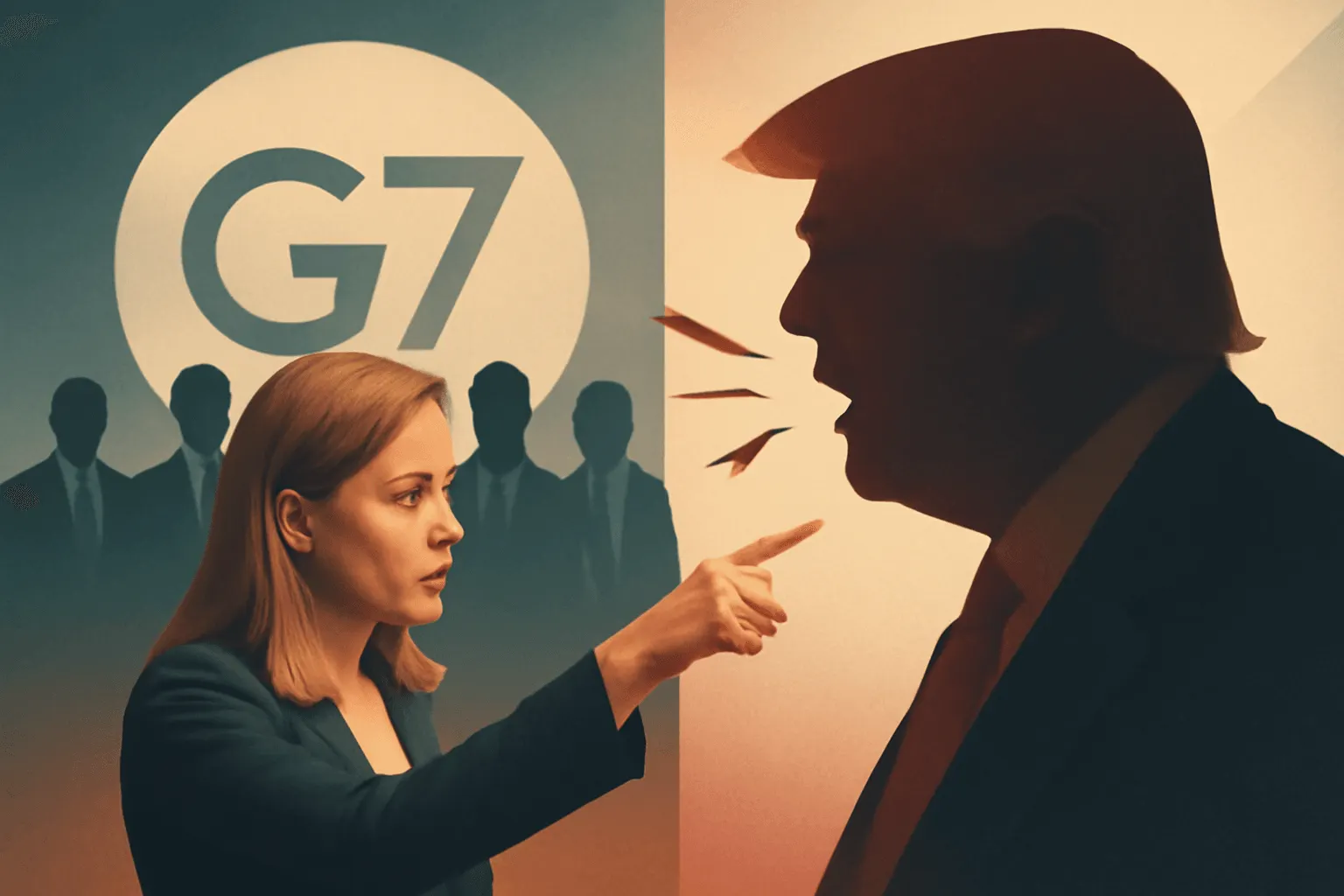
A diplomatic spat between Rome and Washington has burst into the open, with Italian Prime Minister Giorgia Meloni refusing to let stand U.S. President Donald Trump's claim that she pleaded with him for a photograph at the Group of Seven summit in France. As reported by CBS News, Meloni dismissed the account as invented and accused the American leader of subjecting an ally to "constant, unprovoked attacks."
How the Quarrel Started
The friction traces back to remarks Trump made to an Italian broadcaster, in which he claimed Meloni "wanted a picture with me so badly" and that he "felt sorry for her." According to CBS News, he did not stop there. He faulted the Italian leader for declining to let the United States use Italian airstrips during the recent confrontation with Iran, and he tied what he characterized as her slipping popularity to that refusal to embrace American backing.
For Meloni, who has cultivated a reputation as a leader unwilling to be cornered, the characterization demanded an immediate rebuttal. The episode is a reminder of how quickly summit-stage choreography, who stands where and who poses with whom, can spill into a genuine test of national pride.
Meloni's Response
The prime minister answered in unusually personal terms. "Italy and I do not beg," she said in a video statement carried by the outlet, adding that she was "frankly stunned" by comments she insisted were fabricated from start to finish. She also turned the spotlight back on the president's conduct, questioning why he would treat "his own allies" in such a manner, and underscoring that "Italy remains a sovereign nation."
The framing was deliberate. By casting the disagreement as a matter of sovereignty rather than wounded feelings, Meloni sought to rally domestic opinion behind her and to recast a personal jab as an affront to the country itself.
Diplomatic Fallout
The words carried tangible consequences. CBS News notes that Foreign Minister Antonio Tajani scrapped a scheduled trip to the United States, where he had been due to meet Secretary of State Marco Rubio and take part in a business forum in Miami. Tajani branded the president's comments "serious and offensive," a rare public rebuke from a government that had positioned itself as one of Washington's friendliest partners in Europe.
Across Italy's political spectrum, senior figures lined up behind the prime minister:
- Defense Minister Guido Crosetto said he could not picture Meloni behaving as described, warning that "jokes of this kind do no good to anyone."
- Justice Minister Carlo Nordio reached back to history, invoking the memory of the American soldiers who died liberating Italy in World War II.
That show of unity, cutting across cabinet portfolios, signaled that the response was meant to be read as Italy's, not merely Meloni's.
A Cooling Alliance
The clash marks a notable deterioration in a relationship long viewed as one of the strongest bridges between European capitals and the Trump administration. Meloni stressed, according to CBS News, that her standing "depends on my ability to defend Italy's national interest," recasting the standoff as a duty rather than a grievance.
What happens next is uncertain. Personal feuds between leaders sometimes cool as quickly as they ignite, smoothed over by aides eager to protect trade ties, defense coordination and the optics of Western unity. Yet reporting suggests this rupture has been harder to mend, with both leaders continuing to trade barbs. For observers of transatlantic politics, the episode is a pointed illustration of how thin the line can be between alliance and antagonism when two combustible personalities collide on the world stage.
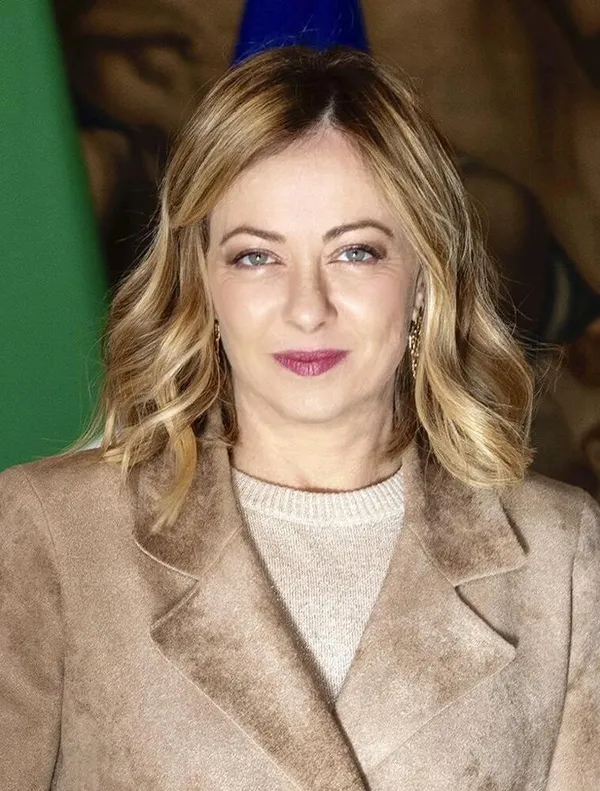 ProfileGiorgia MeloniPrime Minister of Italy
Related
Milei's cabinet chief Adorni quits amid spending scandal
Argentine Cabinet Chief Manuel Adorni resigned amid an investigation into his finances, a blow to President Javier Milei as his approval rating slides.
Albanese Vows to Toughen Australia's Under-16 Social Media Ban
Prime Minister Anthony Albanese says big tech is failing to comply with Australia's world-first under-16 social media ban and is pushing tougher penalties and new enforcement powers.
Zelenskyy Details Russia's Latest Week of Airstrikes
President Zelenskyy laid out the scale of Russia's bombardment over the past week, reporting nearly 3,000 aerial weapons fired across 15 Ukrainian regions.