Netanyahu pushes to end Israel's US military aid dependence

Netanyahu told reservists that Israel must build an independent armaments industry and shift from aid recipient to defense partner, backing a US congressional proposal to phase out $3.8 billion in annual aid.
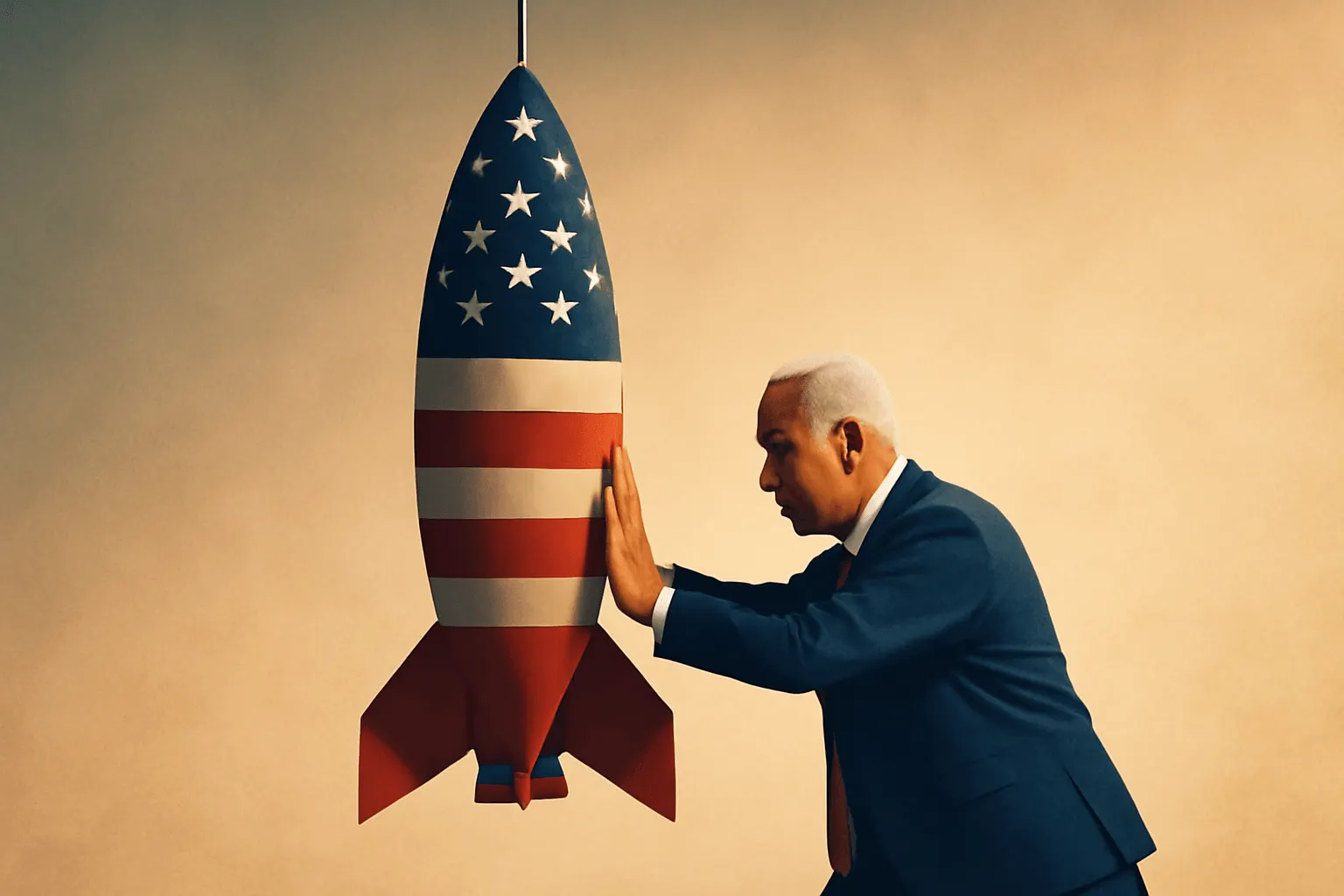
From Recipient to Partner
Prime Minister Benjamin Netanyahu has sketched out an ambitious plan to wean Israel off the American military assistance that has underpinned its defense for decades, telling reservists that the country must build its own weapons and stand on its own footing. The Jerusalem Post reported on June 24 that Netanyahu delivered the message at a combat officers' course in Gush Etzion, where he told the audience, "The time has now arrived for us to move from aid recipient to partner."
His language left little room for ambiguity. "I want armaments independence," he said, according to the paper. "We must manufacture our own armaments." The remarks amount to a deliberate reframing of a relationship that has long shaped Israel's strategic posture, casting US support not as a permanent fixture but as something to be gradually replaced by domestic capacity and reciprocal cooperation between the two governments.
A Proposal Taking Shape in Washington
Netanyahu's comments align closely with a measure already moving through the US Congress. The Jerusalem Post reports that Rep. Marlin Stutzman (R-Indiana) has filed a resolution proposing to phase out the roughly $3.8 billion in annual military aid the United States extends to Israel, swapping it for cooperative defense and trade frameworks. The prime minister signaled his backing in a letter to Stutzman after the two met, and the outlet notes that some congressional Republicans have started to rally behind the concept.
The emerging push, as described in the reporting, rests on several pillars:
- Gradually ending direct US grant aid.
- Building joint defense projects framed around mutual benefit.
- Expanding Israel's domestic arms manufacturing base.
Taken together, these elements envision a transition rather than an abrupt cut, an attempt to preserve the substance of the alliance while changing its financial architecture. Such a restructuring would touch procurement, industrial policy and the close coordination that has characterized US-Israeli defense ties for years.
Why It Matters Now
The timing of the proposal gives it added weight. Israel has spent recent months navigating a volatile regional landscape and a sometimes-complicated relationship with Washington, and a deliberate move toward self-reliance would represent a strategic shift with consequences stretching well into the future. Reducing dependence on external aid can offer a government greater freedom of action, but it also shifts substantial costs onto the domestic budget and demands a robust industrial base capable of filling the gap.
Stutzman, paraphrased by the Jerusalem Post, argued that "Israel is strong" and that a future relationship should be built around shared defense ventures rather than one-way transfers. That framing reflects a broader argument advanced by proponents: that a mature partnership between capable allies looks different from the aid arrangements of earlier eras.
An Uncertain Road Ahead
Whether the vision translates into policy is far from settled. Phasing out billions of dollars in long-established aid would require sustained support across the US Congress, where competing priorities and shifting politics can stall even popular initiatives. It would also depend on Israel credibly scaling up its own arms production, an undertaking that typically unfolds over years and carries significant cost and risk.
For now, Netanyahu appears focused on shaping the narrative. By using public appearances before military audiences to advance the idea, he is presenting independence not as a rupture with the United States but as the natural next chapter of a durable alliance. The coming months, and the fate of the resolution in Washington, will reveal how much appetite exists on both sides to turn that rhetoric into a concrete change in one of the world's most consequential defense relationships.
 ProfileBenjamin NetanyahuPrime Minister of Israel
Related

Milei's cabinet chief Adorni quits amid spending scandal
Argentine Cabinet Chief Manuel Adorni resigned amid an investigation into his finances, a blow to President Javier Milei as his approval rating slides.

Albanese Vows to Toughen Australia's Under-16 Social Media Ban
Prime Minister Anthony Albanese says big tech is failing to comply with Australia's world-first under-16 social media ban and is pushing tougher penalties and new enforcement powers.

Zelenskyy Details Russia's Latest Week of Airstrikes
President Zelenskyy laid out the scale of Russia's bombardment over the past week, reporting nearly 3,000 aerial weapons fired across 15 Ukrainian regions.