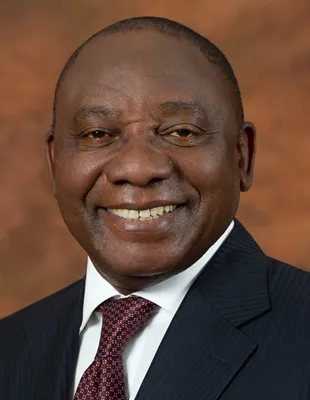
Cyril Ramaphosa is a South African politician, businessman, and former trade union leader who serves as President of South Africa. His career spans the struggle against apartheid, the negotiations that led to democratic transition, a successful period in business, and ultimately the country's highest political office.
Activism and Union Leadership
Ramaphosa was born in Soweto, Johannesburg, and became politically active during his student years, taking part in movements that opposed the apartheid system. He trained as a lawyer and rose to prominence as a labor organizer, founding and leading the National Union of Mineworkers, which grew into one of the most powerful unions in the country. Through this work he became a leading voice for workers' rights and a significant figure in the broader anti-apartheid movement.
His skills as an organizer and negotiator brought him to national attention, and he played an important part in mobilizing labor and civil society during a turbulent and transformative period in South African history.
Role in the Democratic Transition
Ramaphosa became a central figure in the negotiations that brought an end to apartheid and ushered in democratic rule. As a senior official of the African National Congress, he was deeply involved in the talks between the governing authorities and liberation movements, and he is widely credited with playing a key role in the constitutional negotiations that shaped the new South Africa. He chaired the assembly responsible for drafting the country's democratic constitution, a landmark achievement in the nation's history.
Despite his prominence during this era, he later stepped back from front-line politics for a time and turned his attention to business.
Business and the Presidency
In the years that followed, Ramaphosa became a successful businessman, building substantial interests across a range of industries and becoming one of South Africa's prominent entrepreneurs. His business career made him a notable figure in the country's economy before he returned more actively to political life.
He re-entered senior politics and was elected deputy president of the country, before becoming leader of the African National Congress and subsequently President of South Africa. As president, he has led the government through a range of economic and social challenges and has emphasized themes such as economic growth, governance, and reform. His tenure, like that of any national leader, has involved decisions and policies that are the subject of ongoing public and political debate.
Ramaphosa's career is notable for the breadth of roles he has held, moving from union activism to constitutional negotiation, then to business, and finally to the presidency. This trajectory reflects many of the major chapters of South Africa's recent history, from the struggle against apartheid to the challenges of building and sustaining a democratic state.
As a figure who helped shape the country's transition to democracy and who now leads its government, Cyril Ramaphosa occupies a significant place in South African public life. His record continues to be examined by commentators and citizens alike as the nation addresses its economic and social priorities, and his long and varied career remains central to how he is understood as a national leader.