US Judge Presses DOJ Over Dropping Adani Fraud Case

A US federal judge ordered the Justice Department to justify its move to drop bribery charges against Gautam Adani, calling the explanation terse and conclusory.

A Judge Demands a Better Explanation
The protracted U.S. legal drama surrounding Indian billionaire Gautam Adani has taken another unexpected twist. According to The Quint, a federal judge in New York has refused to simply rubber-stamp the government's request to walk away from criminal charges against the Adani Group chairman, instead ordering prosecutors to spell out, in far greater detail, why they want the case gone. The Justice Department has until July 13, 2026, to respond.
Judge Nicholas Garaufis made clear he was unimpressed with the government's opening effort. He described the Justice Department's filing as "terse, bland and conclusory," language that signals a court unwilling to accept a thin justification for abandoning a high-profile prosecution. The DOJ had sought dismissal on May 18, 2026, leaning on prosecutorial discretion and the allocation of limited resources.
What the Charges Alleged
The roots of the case reach back to a November 2024 indictment. As The Quint reported, prosecutors alleged a bribery scheme worth roughly $265 million tied to lucrative solar energy contracts, paired with misrepresentations made to investors in the United States. Adani has consistently denied any wrongdoing, and the criminal matter has now stalled in legal limbo while the judge presses for answers.
For a businessman who sits atop one of India's largest conglomerates, the stakes extend well beyond the courtroom. Foreign-bribery cases of this magnitude tend to reverberate through global capital markets, shaping how international banks and institutional investors price risk when dealing with the group.
A Tangle of Related Settlements
Even as the criminal charges hang unresolved, several connected civil matters have been put to rest. The Quint reports the following resolutions:
- Gautam Adani agreed to pay $6 million, and his nephew Sagar Adani $12 million, in a separate civil securities settlement, neither admitting wrongdoing.
- Adani Enterprises separately agreed to pay $275 million over alleged violations of Iran sanctions.
Settlements of this kind allow companies to draw a line under disputes without conceding guilt, but they rarely silence political critics, and this case is no exception.
Politics Hovers Over the Case
The decision to seek dismissal has not played out in a vacuum. The Quint notes that the move has attracted pointed scrutiny in Washington. Reporting that Adani's representatives floated as much as $10 billion in potential U.S. investment prompted Democratic senators to question whether a "quid pro quo" might be at work, linking large business commitments to the unwinding of the prosecution. The administration has rejected any suggestion of impropriety, but the optics have kept the matter politically combustible.
What Happens Next
For now, the practical effect of Judge Garaufis's order is straightforward: the case stays alive, at least through the summer. Prosecutors must return with a fuller, more persuasive justification before any dismissal can proceed, and the judge has reserved the right to weigh the public's interest in seeing the matter fully aired.
The episode underscores an important check in the American system, namely that even when the executive branch wants to drop a case, courts can insist on transparency about why. How the Justice Department answers will be closely watched, not only by Adani's legal team and political observers, but by an international investor community that has tracked the conglomerate's legal exposure since the original indictment. Until a more detailed filing arrives, one of the most prominent foreign-bribery cases in recent memory remains unresolved.
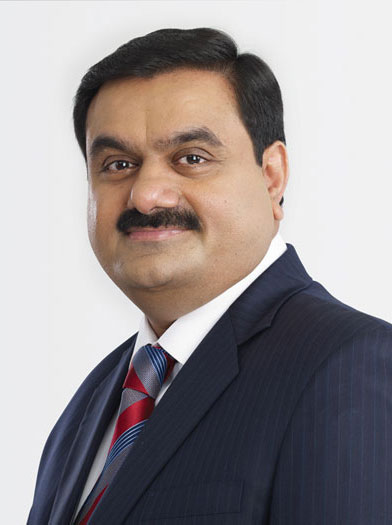 ProfileGautam AdaniIndian Industrialist and Founder of the Adani Group
Related

Djokovic Joins Private Equity Firm General Atlantic as Advisor
Novak Djokovic is trading the baseline for the boardroom, joining private equity giant General Atlantic as a global strategic advisor and deepening his bet on health, wellness and sports tech.

OpenAI Eyes 2027 IPO as Altman Holds Firm on $1 Trillion
OpenAI is reportedly willing to push its public debut to 2027 rather than accept anything less than Sam Altman's $1 trillion valuation target.
Arnault Pledges 50M Euros for New Polytechnique Math Institute
LVMH chief Bernard Arnault is giving 50 million euros through his family holding Agache to build a mathematics institute at his old school, Ecole Polytechnique.