Pichai Tells Stanford Grads to Choose Optimism as Some Walk Out

Google CEO Sundar Pichai urged Stanford graduates to embrace optimism and persistence, even as a group of students walked out in protest of the company's government contracts.
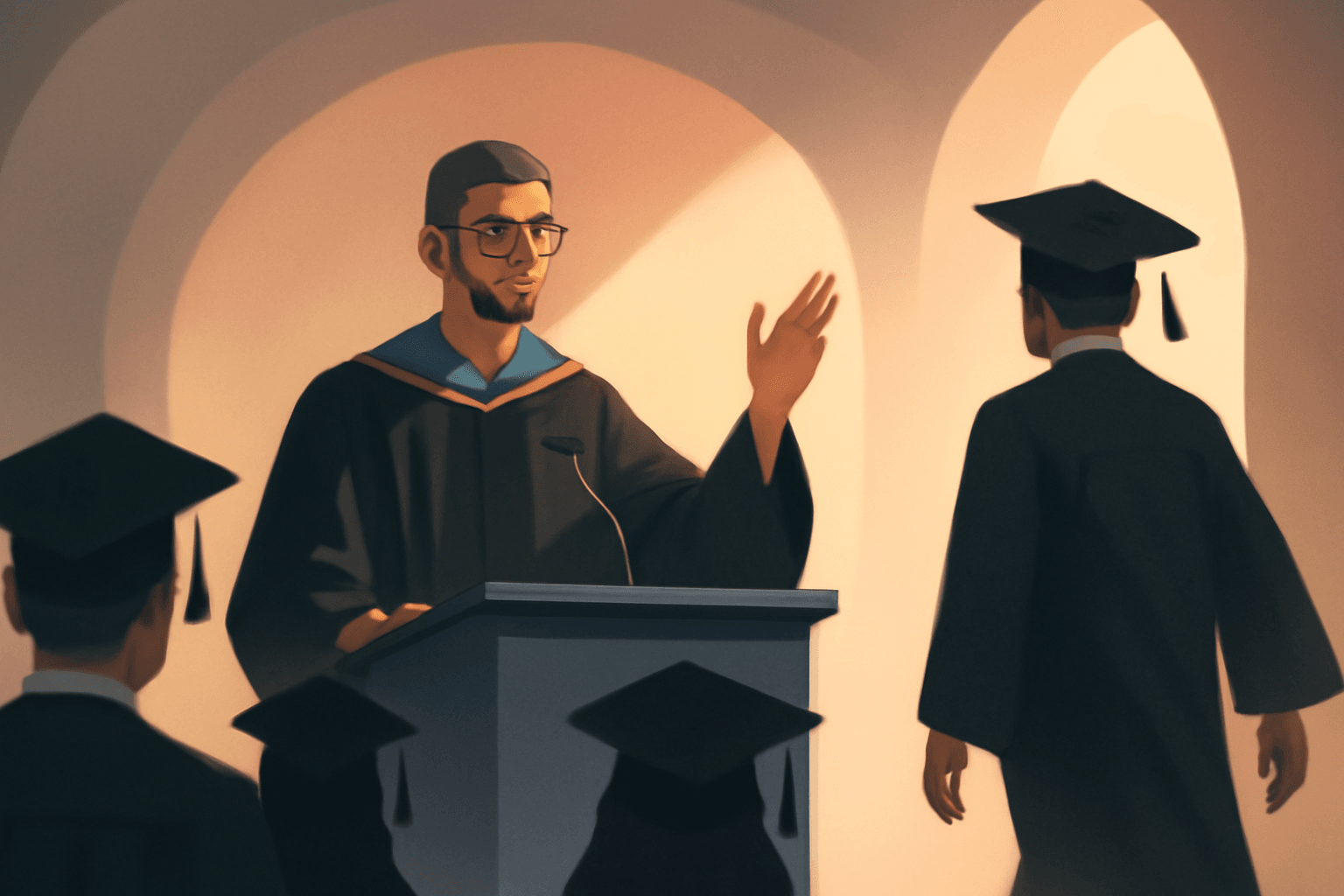
An alum returns to the podium
There was a neat symmetry to Stanford's 135th commencement: the speaker had once sat in the audience. Google chief executive Sundar Pichai, who earned a master's degree at the university in 1995, returned to deliver the address, and according to The Stanford Daily he organized his remarks around three threads - finding balance, reframing setbacks with optimism, and pressing on through uncertainty.
Pichai's path from international student to head of one of the world's most valuable companies gave the speech an obvious throughline, and he used it. He reminded graduates that fun belongs alongside hard work, recalling the first time he skipped a class and discovered that "the world wouldn't end" if he eased off the throttle now and then.
Lessons in optimism and persistence
Much of the address leaned on personal anecdote rather than grand pronouncement. The report said Pichai described learning to see California's brown summer hills not as drab but as golden - a small mental reframe he offered as a metaphor for finding worth in a reality that does not match expectations.
He was also frank about how non-linear careers tend to be. Pichai recounted feeling adrift roughly a decade after leaving Stanford, before a pivotal interview at Google redirected his life. The message to new graduates anxious about the road ahead was that uncertainty is normal and rarely permanent. His core advice came down to a few points:
- Make room for enjoyment, not only achievement.
- Reframe disappointment to find the upside in it.
- Stay patient when the way forward is unclear.
It was, in many ways, a conventional commencement message - hopeful, personal, and aimed at graduates stepping into an uncertain economy and a fast-changing tech landscape that Pichai's own company is helping to reshape.
Protest in the stands
The optimism, however, did not go unchallenged. The Stanford Daily reported that somewhere between 100 and 200 of the roughly 6,000 graduates walked out during the ceremony, making it the third Stanford commencement in a row to feature a walkout. The protesters were objecting to Google's involvement in Project Nimbus, a $1.2 billion contract with the Israeli government, along with services the company provides connected to U.S. Immigration and Customs Enforcement.
Rather than simply leave, demonstrators staged an alternative gathering they called the "People's Commencement" in the Arboretum. The event featured activist Mahmoud Khalil and student speakers who voiced solidarity with Palestinians, turning the protest into its own parallel ceremony with its own program.
Two messages on one campus
The split screen was hard to miss. On the main stage, a tech leader urged the next generation to choose hope and persistence; a short walk away, a slice of that same generation was registering its anger at how the technology industry deploys its power. The juxtaposition captured a tension that has trailed big tech for years - between the upbeat, build-the-future rhetoric its executives favor and the scrutiny over the government and military work that helps fund it.
For Pichai, the day was both a homecoming and a reminder that leading Google now means his words are inseparable from the company's choices. He pressed graduates to look forward with confidence, and many did. But the walkout ensured that the message landing loudest in the headlines was not only about optimism - it was about the questions a rising generation is determined to keep asking of the companies they may soon work for.
 ProfileSundar PichaiCEO of Alphabet and Google
Related
Nadella Bets on a 33-Year-Old Exec to Fix Copilot
Fortune reports that Satya Nadella is leaning on 33-year-old Jacob Andreou, now running Microsoft Copilot, to pull the company's flagship AI assistant ahead after a slow start.

PewDiePie's Odysseus Turns Local AI Into a Real Workspace
Odysseus, the free self-hosted AI workspace built by Felix 'PewDiePie' Kjellberg, has blown past 76,000 GitHub stars within a month, pitching a simple idea: own your AI instead of renting it.
Michael Dell Becomes World's Fifth-Richest on AI Boom
A 225% surge in Dell stock has pushed Michael Dell's fortune to roughly $216 billion, vaulting him to fifth on the global rich list as demand for AI servers explodes.