Tech
Yann LeCun Bets $1.03B Against the LLM Orthodoxy
After leaving Meta, AI pioneer Yann LeCun has raised $1.03 billion for AMI Labs on a contrarian wager: that large language models are the wrong road to real intelligence.

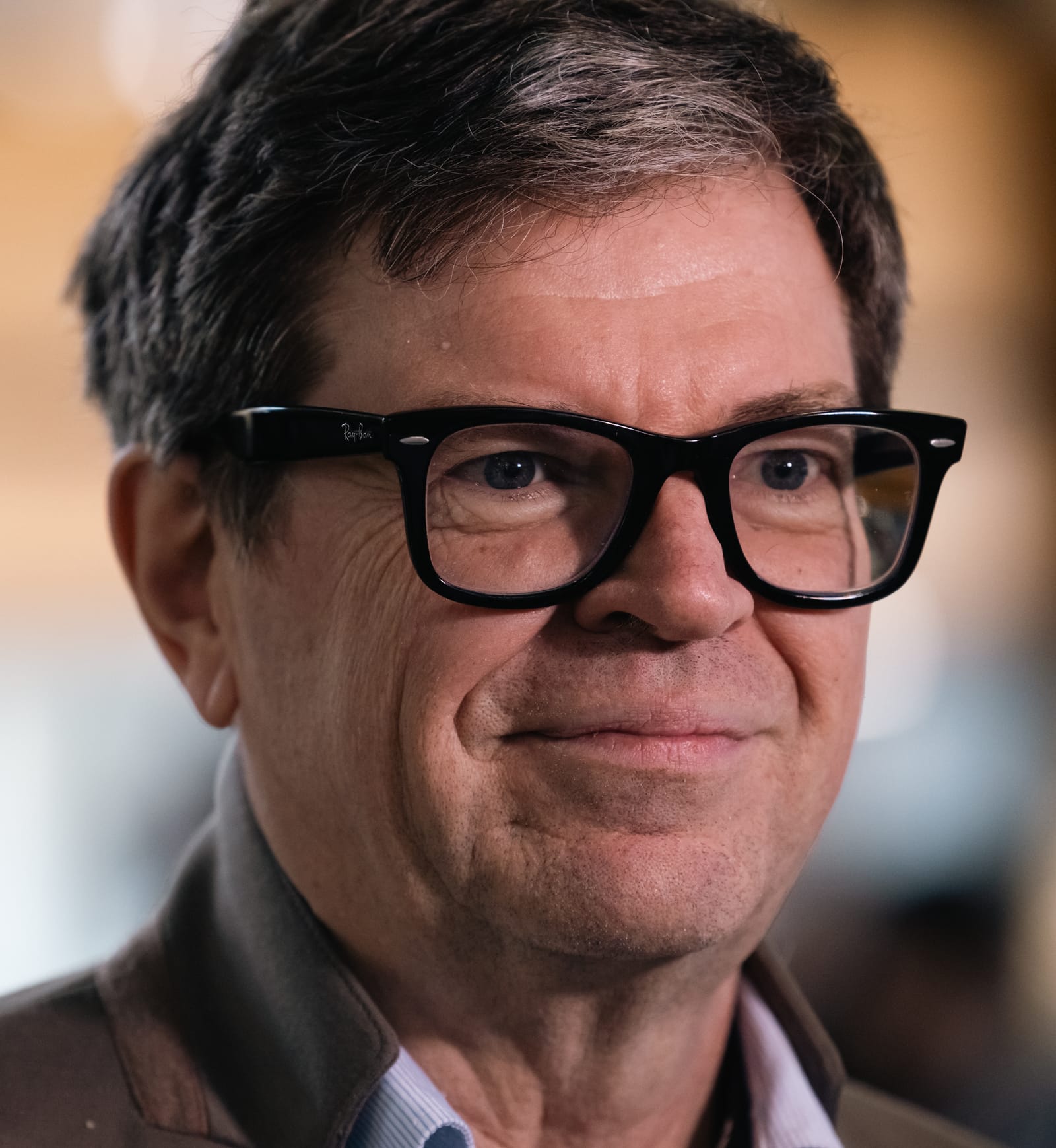
AI researcher and deep learning pioneer
Yann LeCun is a French-American computer scientist widely regarded as one of the founding figures of modern deep learning. His pioneering work on convolutional neural networks helped lay the technical foundations for the artificial intelligence systems that now power image recognition, natural language processing, and many other applications. He is a recipient of the Turing Award, often described as the highest honor in computing.
LeCun was born near Paris, France, and earned his engineering degree and later a doctorate in computer science in France, where his early research focused on machine learning and neural networks at a time when the field was out of fashion. After completing a postdoctoral position with Geoffrey Hinton in Toronto, he joined AT&T Bell Laboratories, where he carried out some of his most influential work.
At Bell Labs, LeCun developed convolutional neural networks (CNNs), a type of model inspired by the structure of the visual cortex, capable of efficiently recognizing patterns in images. He applied these techniques to practical problems such as reading handwritten digits, and his systems were deployed commercially to process bank checks. These contributions demonstrated that neural networks could solve real-world problems, even though broader adoption of the approach would take many more years as computing power and data availability grew.
After his time in industry research, LeCun became a professor at New York University, where he continued advancing machine learning and helped establish the institution as a hub for AI research. Along with Geoffrey Hinton and Yoshua Bengio, he is frequently grouped as one of the so-called "godfathers of deep learning," a trio credited with persevering through periods of skepticism toward neural networks. In recognition of their collective contributions, the three shared the Turing Award, honoring breakthroughs that enabled the deep learning surge of the 2010s.
LeCun later joined Meta (then Facebook), where he founded and led the company's AI research organization and served as its chief AI scientist. In this role he helped shape one of the largest corporate AI research efforts in the world, contributing to advances in computer vision, self-supervised learning, and the development of open research practices. He has been a strong proponent of open scientific collaboration and the public release of research and models.
Beyond his technical achievements, LeCun is known for his outspoken views on the direction of artificial intelligence. He has argued that current large language models, while powerful, have fundamental limitations, and he has championed alternative approaches aimed at building machines with deeper understanding and reasoning, including ideas around world models and self-supervised learning. He has frequently engaged in public debates about AI capabilities, safety, and the realistic timeline toward more general forms of machine intelligence.
Throughout his career, LeCun has received numerous honors recognizing his scientific contributions, and he remains an influential voice in both academia and industry. As a teacher, researcher, and public commentator, he continues to shape how the field thinks about the future of intelligent systems. His combination of foundational technical work and willingness to challenge prevailing assumptions has made him a central figure in the ongoing evolution of artificial intelligence.
After leaving Meta, AI pioneer Yann LeCun has raised $1.03 billion for AMI Labs on a contrarian wager: that large language models are the wrong road to real intelligence.