Politics
Peter Thiel's Secret 'Dialog' Society Exposed in Data Leak
A hacktivist leak has exposed Dialog, a secretive invitation-only network co-founded by Peter Thiel that convenes elites from politics, finance, military and tech.
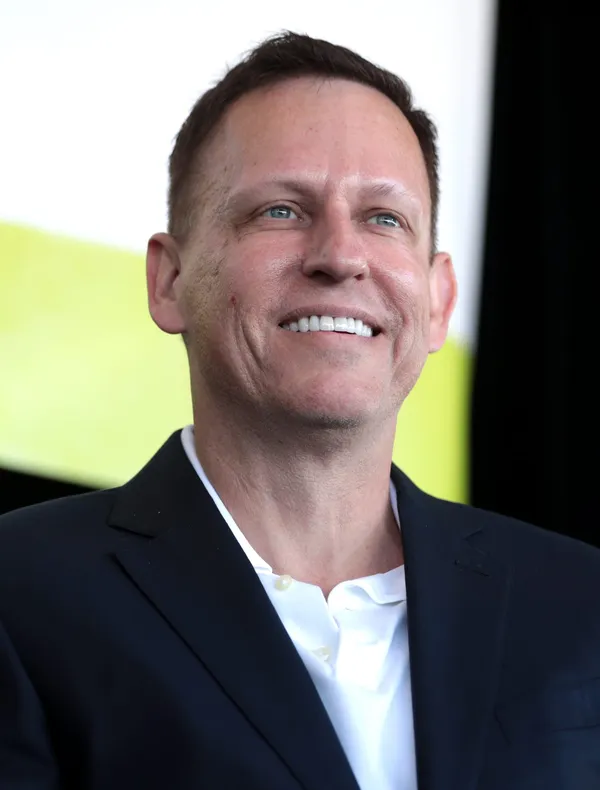
Venture capitalist & entrepreneur
Peter Thiel is a German-American entrepreneur, venture capitalist, and author who has been one of the most influential and provocative figures in Silicon Valley. A co-founder of PayPal and the data analytics company Palantir, an early investor in Facebook, and the founder of the venture firm Founders Fund, he has shaped both the technology industry and the broader cultural and political debates surrounding it.
Born in Frankfurt and raised partly in the United States, Thiel studied philosophy and later law at Stanford University. After early stints in law and finance, he turned to entrepreneurship. In the late 1990s he co-founded the company that became PayPal, an online payments service that helped pioneer digital commerce. Its eventual sale was a landmark moment, and the network of founders and early employees who emerged from it, often called the "PayPal Mafia," went on to launch or fund an extraordinary number of influential technology companies.
Thiel's reputation as a sharp investor was cemented when he made an early outside investment in Facebook, providing crucial backing at a formative stage of the social network. The bet became one of the most celebrated in venture capital history and established him as a leading talent-spotter in consumer technology.
Thiel co-founded Palantir Technologies, a company specializing in large-scale data analysis used by government agencies and private enterprises, reflecting his long-standing interest in software that tackles complex, real-world problems. Through Founders Fund, the venture capital firm he helped establish, he backed a range of ambitious startups across sectors including aerospace, biotechnology, and software, often favoring bold, contrarian ideas over incremental ones.
His investment philosophy is distilled in his influential book "Zero to One," co-written with a former student, which argues that the most valuable companies create entirely new things rather than copying existing models. The book popularized his emphasis on building monopolistic, differentiated businesses and thinking independently against prevailing consensus, and it became a widely read text among entrepreneurs.
Thiel is known for views that frequently diverge from those of much of the technology community. He has funded a variety of causes and initiatives, including the Thiel Fellowship, which offers young people grants to pursue ventures or research instead of attending college, and efforts in science, longevity research, and education. He has also been an active and at times polarizing participant in American politics, supporting candidates and causes that have drawn significant public attention and debate.
His involvement in a high-profile lawsuit that contributed to the bankruptcy of a media organization sparked intense discussion about press freedom, privacy, and the power of wealthy individuals to influence litigation. Throughout his career, Thiel has cultivated a public persona as a contrarian thinker, drawing on his background in philosophy to frame his arguments about technology, progress, and society.
Admired by supporters as a visionary investor and original thinker, and criticized by others for his political activities and outspoken positions, Peter Thiel remains a defining and divisive figure in the modern technology landscape. His fingerprints can be found across many of the companies and ideas that have shaped the digital economy of the twenty-first century.
A hacktivist leak has exposed Dialog, a secretive invitation-only network co-founded by Peter Thiel that convenes elites from politics, finance, military and tech.