Tech
Pavel Durov Slams India's Telegram Ban Over Exam Leaks
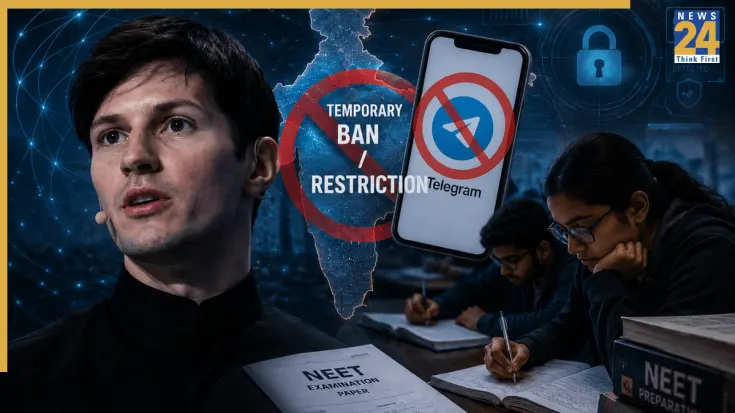
Telegram founder Pavel Durov branded India's temporary ban of the app collective punishment of more than 150 million users over leaked medical-exam papers.

Founder of Telegram and VK
Pavel Durov is a Russian-born entrepreneur and programmer best known as the founder of the messaging app Telegram and the co-founder of VK, one of the largest social networks in the Russian-speaking world. An outspoken advocate for online privacy and freedom of expression, Durov has built a reputation as a libertarian-minded technologist who has repeatedly clashed with governments over user data and censorship.
Durov was born in Leningrad (now Saint Petersburg) in the Soviet Union and spent part of his childhood in Italy before returning to Russia. He studied at Saint Petersburg State University, where he showed an early aptitude for languages and programming. In 2006, together with his brother Nikolai Durov, a gifted mathematician and programmer, he launched VKontakte, commonly known as VK. The platform rapidly became the dominant social network across Russia and neighboring countries, often compared to Facebook in its features and reach.
Durov's tenure at VK was marked by growing tension with Russian authorities. He publicly resisted demands to hand over user data and to shut down opposition-related communities on the platform. These conflicts ultimately led to him losing control of the company; he sold his stake and left VK, departing Russia and adopting a more international, stateless lifestyle that included acquiring citizenship in other countries.
In 2013, Pavel and Nikolai Durov launched Telegram, a cloud-based messaging application that emphasized speed, security, and encryption. Built partly in response to concerns about surveillance, Telegram offered features such as secret chats with end-to-end encryption, large group channels, and a commitment to not sharing user data with governments. The app attracted hundreds of millions of users worldwide and became especially popular among activists, journalists, and communities seeking alternatives to mainstream platforms.
Telegram positioned itself as independent and privacy-focused, and Durov funded much of its early development personally. The platform also experimented with blockchain technology through a project that drew regulatory scrutiny in the United States, leading Telegram to abandon that initiative. Despite controversies, Telegram continued to grow into one of the most widely used messaging services globally, particularly during periods of political upheaval and during the rise of remote communication.
Durov has cultivated an image as a digital nomad and defender of personal liberty, frequently speaking out against censorship and government overreach. His refusal to comply with certain data requests led to Telegram being blocked or restricted in several countries at various times. He has been described as secretive about his personal life while remaining vocal about his principles regarding free speech and privacy.
In 2024, Durov faced significant legal attention in France, where authorities pursued an investigation related to alleged criminal activity facilitated on Telegram and questions about content moderation on the platform. The case drew international debate about the responsibilities of platform operators, the limits of encryption, and the balance between privacy and law enforcement.
Throughout his career, Durov has remained a polarizing figure: admired by supporters as a champion of open communication and an independent alternative to large Western tech firms, while criticized by others over moderation practices and the use of his platforms by bad actors. His work has nonetheless had a lasting impact on how hundreds of millions of people communicate, and Telegram remains central to discussions about the future of secure, decentralized messaging.
Telegram founder Pavel Durov branded India's temporary ban of the app collective punishment of more than 150 million users over leaked medical-exam papers.