Tech
Fei-Fei Li Splits 'World Models' Into Three Functions
World Labs CEO Fei-Fei Li wants to clean up one of AI's messiest buzzwords, sorting every 'world model' into one of three jobs: rendering, simulating or planning.
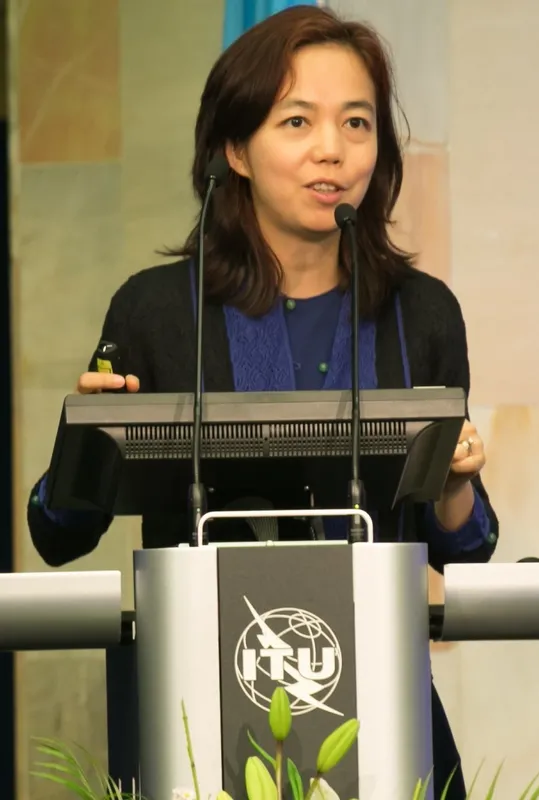
Computer scientist and AI researcher
Fei-Fei Li is a Chinese-American computer scientist widely regarded as one of the most influential figures in modern artificial intelligence. A professor at Stanford University, she is best known for creating ImageNet, a vast image dataset that helped ignite the deep learning revolution, and for her advocacy of human-centered approaches to AI development.
Li was born in Beijing, China, and grew up in Chengdu before immigrating to the United States as a teenager. Her family settled in New Jersey, where she helped support them while learning English and adjusting to a new country, at times working in her parents' dry-cleaning business. She excelled academically and earned a bachelor's degree in physics from Princeton University. She went on to complete a doctorate in electrical engineering at the California Institute of Technology, where her research blended computer vision with insights from neuroscience and cognitive science.
Li's most celebrated contribution is ImageNet, a project she launched in the late 2000s. Recognizing that algorithms needed enormous quantities of labeled data to learn to recognize the visual world, she organized the creation of a database containing millions of categorized images, drawing on crowdsourced labor to annotate them. The associated ImageNet Large Scale Visual Recognition Challenge became a proving ground for computer vision systems.
In 2012, a deep neural network achieved a dramatic leap in accuracy on the ImageNet challenge, a result widely seen as a turning point that demonstrated the power of deep learning when paired with large datasets and modern computing. The breakthrough helped reshape the trajectory of artificial intelligence research and industry, and ImageNet remains a foundational resource in the field.
Li has held prominent roles bridging academia and industry. At Stanford she directed the Artificial Intelligence Laboratory and later co-founded and co-directed the Stanford Institute for Human-Centered Artificial Intelligence, which promotes research and policy ensuring that AI benefits humanity. During a leave from the university, she served as a vice president at Google and chief scientist of AI and machine learning at Google Cloud, gaining firsthand experience deploying AI at scale.
Throughout her career she has emphasized that technology should be guided by human values, diversity, and ethical consideration. She has written and spoken extensively about the importance of building AI that augments human capabilities rather than diminishing them, and her memoir, The Worlds I See, reflects on her personal journey and her vision for the field.
Beyond research, Li is a committed advocate for inclusion in science and technology. She co-founded AI4ALL, a nonprofit dedicated to increasing diversity and broadening access to artificial intelligence education for underrepresented young people. Her efforts aim to ensure that the next generation of AI builders reflects a wider range of backgrounds and perspectives.
Li has received numerous honors and has been recognized among the most influential people shaping technology. More recently she has worked on spatial intelligence and the development of systems that can understand and interact with the three-dimensional world, founding a company focused on this frontier. Her combined record as a researcher, educator, and public voice has made her a defining figure in the story of contemporary artificial intelligence, admired both for her technical achievements and for her insistence that the technology serve the broader good of society.
World Labs CEO Fei-Fei Li wants to clean up one of AI's messiest buzzwords, sorting every 'world model' into one of three jobs: rendering, simulating or planning.